Designing Spaces for Wellbeing, Reflection and Belonging
By Harriet Vickers
A case study exploring how sensory practice, reflection, and co-design can support wellbeing, belonging, and participation within mosque spaces.
Contributors:
Harriet Vickers, Katasi Kironde

Grassroots Community Resilience Pilot Case Study
Designing spaces for wellbeing, reflection and belonging
Mimbar360
About the organisation and project Mimbar 360 is a community-based organisation working at the intersection of faith, space, and wellbeing.
Their work centres on creating environments where people can reflect, connect, and explore their experiences in ways that feel culturally and personally relevant.
The project, Roots and Refuge, was developed through community research and consultation. It brought together:
- wellbeing practices
- creative facilitation
- spatial exploration
to explore how mosque spaces can better support emotional and relational wellbeing.
The sessions were delivered in partnership with facilitators from different disciplines, including a clinical psychologist and a creative practitioner, allowing the work to draw on a range of perspectives and approaches.
The programme was also shaped by neuroarchitectural thinking, including input from Maria A. El Helou (The Neuroarchitect), particularly around how lighting, atmosphere, movement and environmental conditions can influence emotional regulation and embodied experience.
The need and context
The organisation described a gap between the role that faith spaces play in people’s lives and the kinds of emotional, relational and reflective support those spaces are often able to offer.
For many participants, mosques are:
- places of routine and familiarity •
- spaces connected to identity and community
- environments they access regularly
At the same time, there are sometimes limited opportunities within these spaces for:
- reflection
- emotional support informal connection
- conversations about how people experience the space itself
The organisation’s earlier research and consultation suggested that people were not simply looking for more formal outreach, support groups, therapy or counselling. The wider question was about what faith spaces can hold, how they feel, and whether they can support emotional, physical and relational needs in ways that feel culturally relevant.
The starting point was therefore not only a need for wellbeing support, but a need to think differently about the spaces people already use. The project explored how mosque spaces could become places where people feel able to pause, reflect, connect and be cared for in ways that feel culturally relevant.
There is also a wider context of:
- stigma around mental health
- limited culturally relevant provision
- experiences of disconnection from community or faith spaces
In some cases, participants described wanting to rebuild their relationship with these spaces after difficult experiences.
What was delivered and how
The project was delivered over six weeks through a series of structured but flexible sessions.
Alongside the sessions, Mimbar 360 used two evaluation tools to explore participant wellbeing and people’s experience of the mosque environment. These included the Short WarwickEdinburgh Mental Wellbeing Scale (SWEMWBS), used before and after the programme, and the Building Wellbeing Scale, which explores how environments affect psychological wellbeing, including ease, belonging, autonomy, focus and emotional comfort.
These tools sat alongside qualitative reflections, sensory exercises and group discussion, helping the team explore the relationship between environment, wellbeing and belonging in the mosque setting.
Each session combined:
- movement through the mosque space
- creative and reflective activities
- facilitated group discussion
A key feature of the approach was its focus on the built environment.
Participants were invited to:
- notice how different spaces made them feel
- reflect on where they felt comfortable or uncomfortable
- explore how space influences emotion and behaviour
This included exercises such as:
- walking through different areas of the mosque
- observing light, layout, and atmosphere
- reflecting on bodily responses to different environments
The sessions also incorporated sensory elements to support regulation and engagement, including:
- adjusted lighting
- scent and sound
- food and shared social space
These details were intentionally designed to support a shift from everyday stress into a calmer, more reflective state.
As described in the conversation:
“It was very much activating your five senses… to relax, to soothe into a new space.”
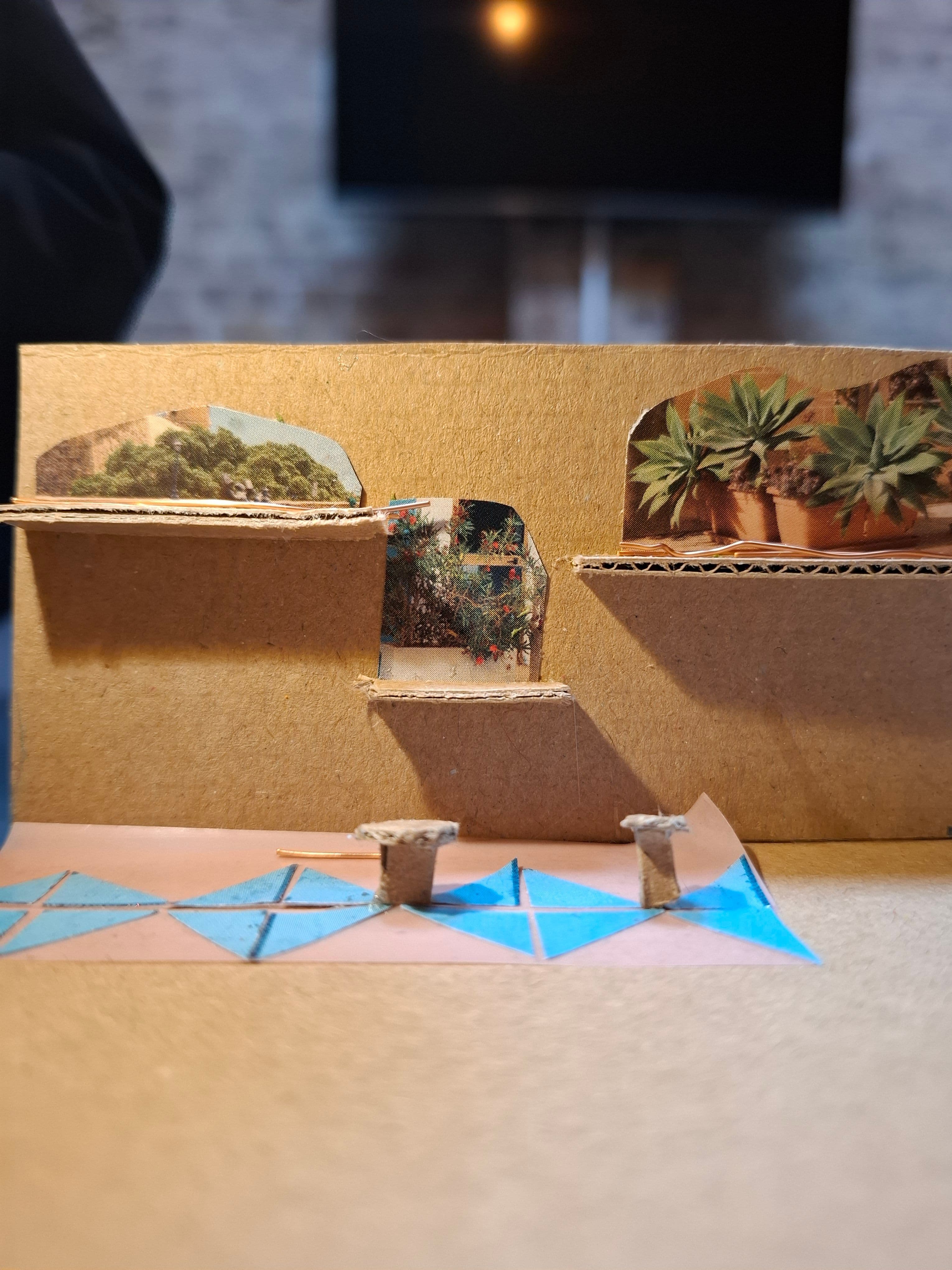
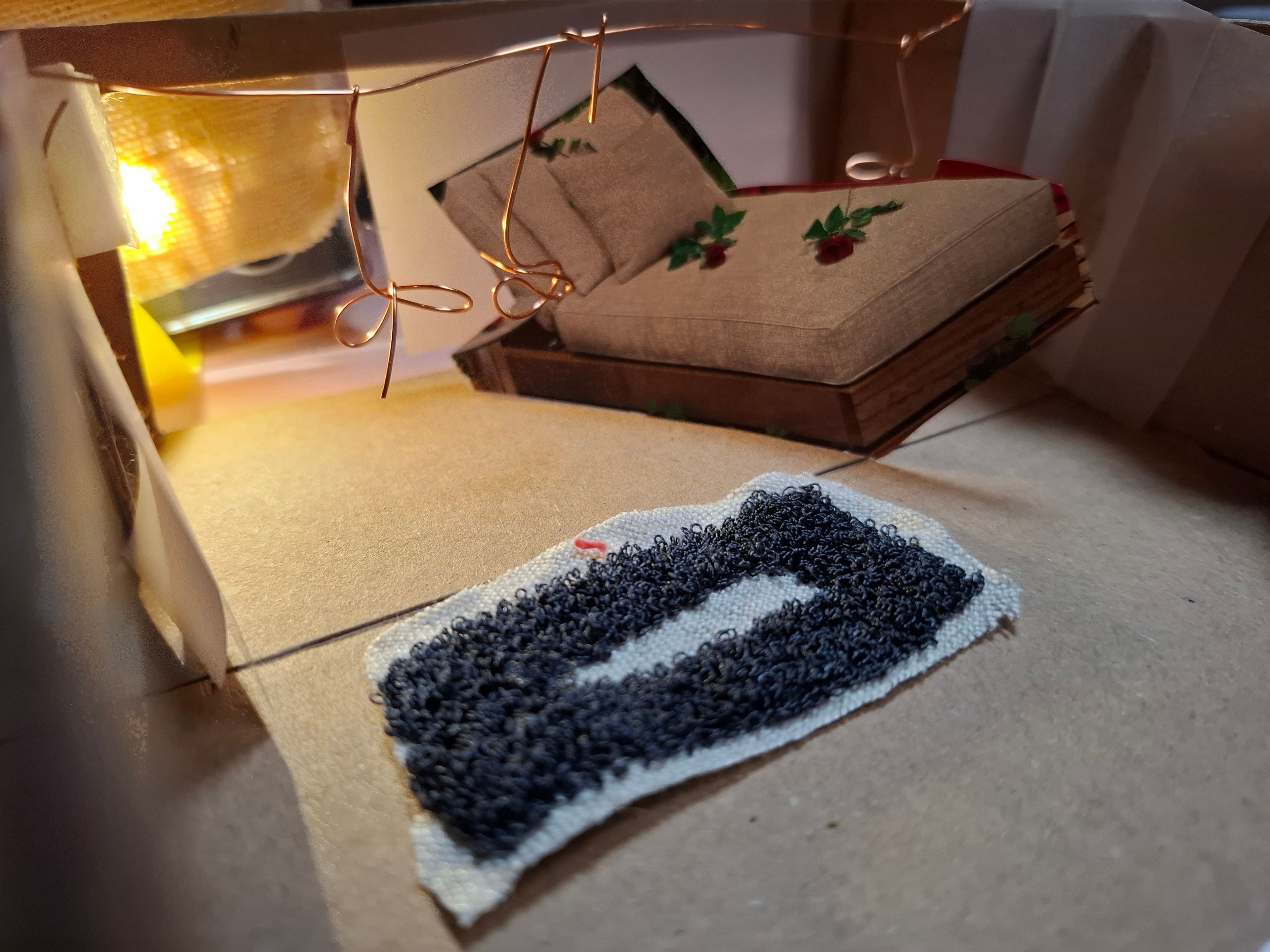
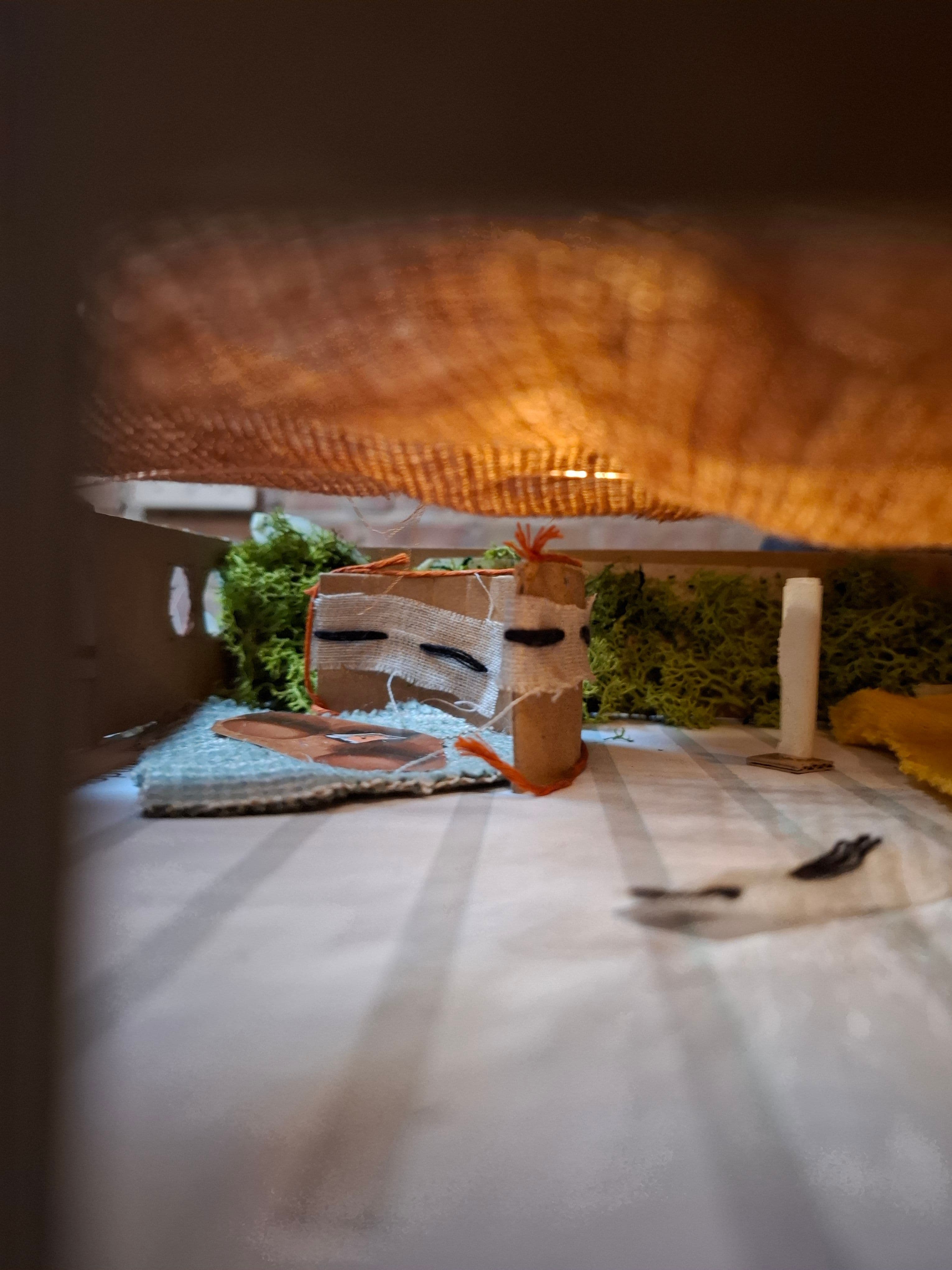
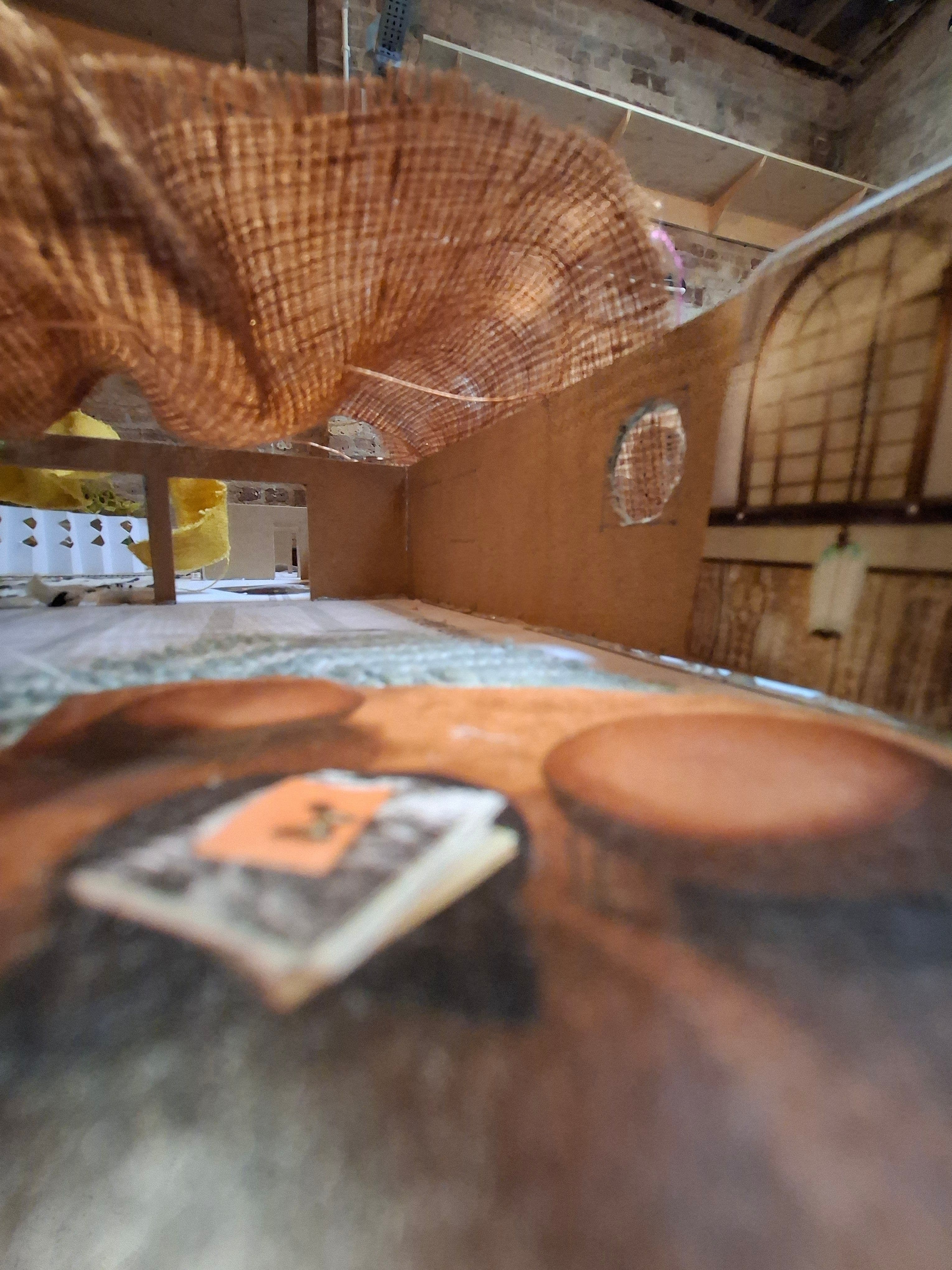
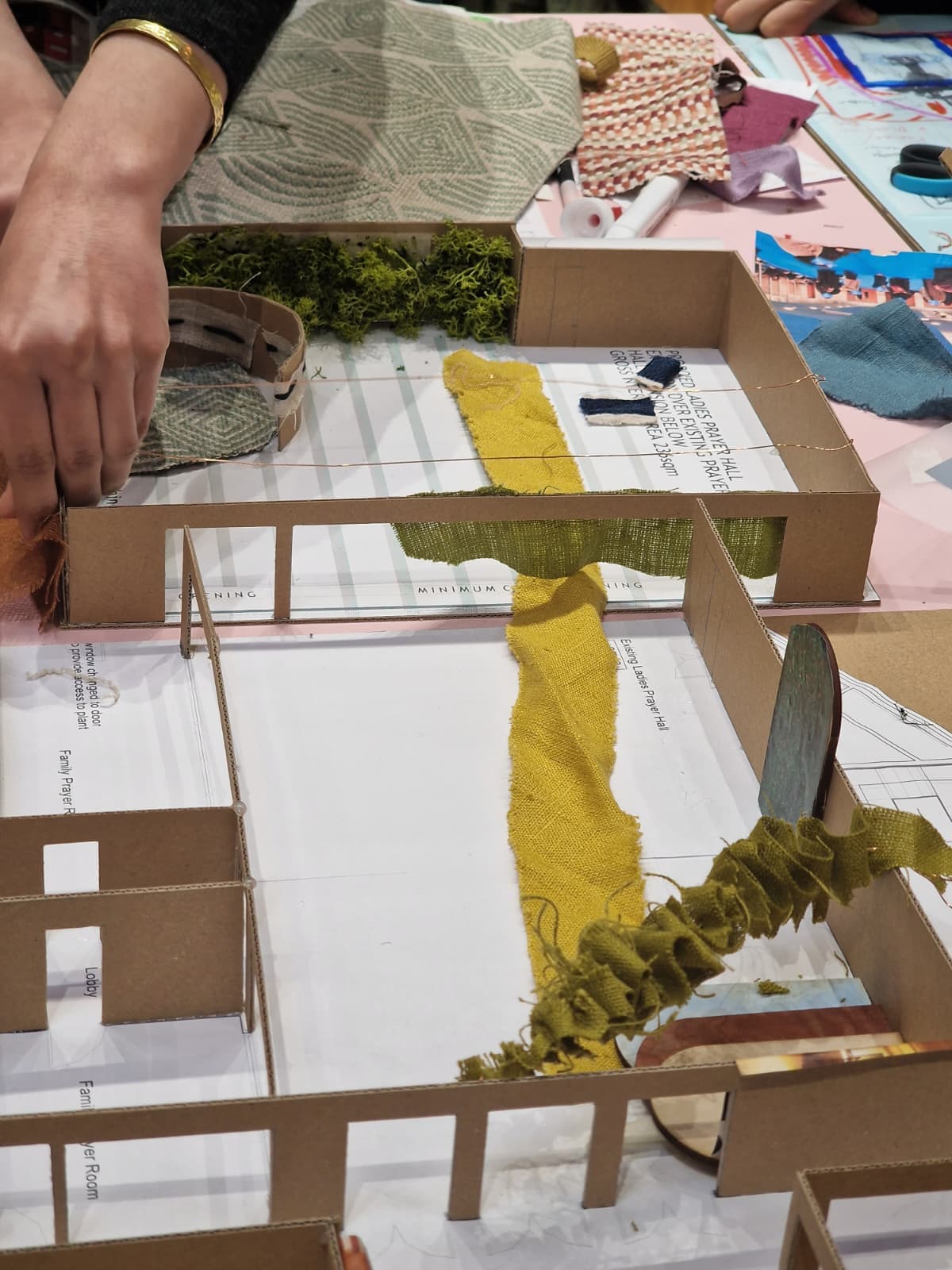
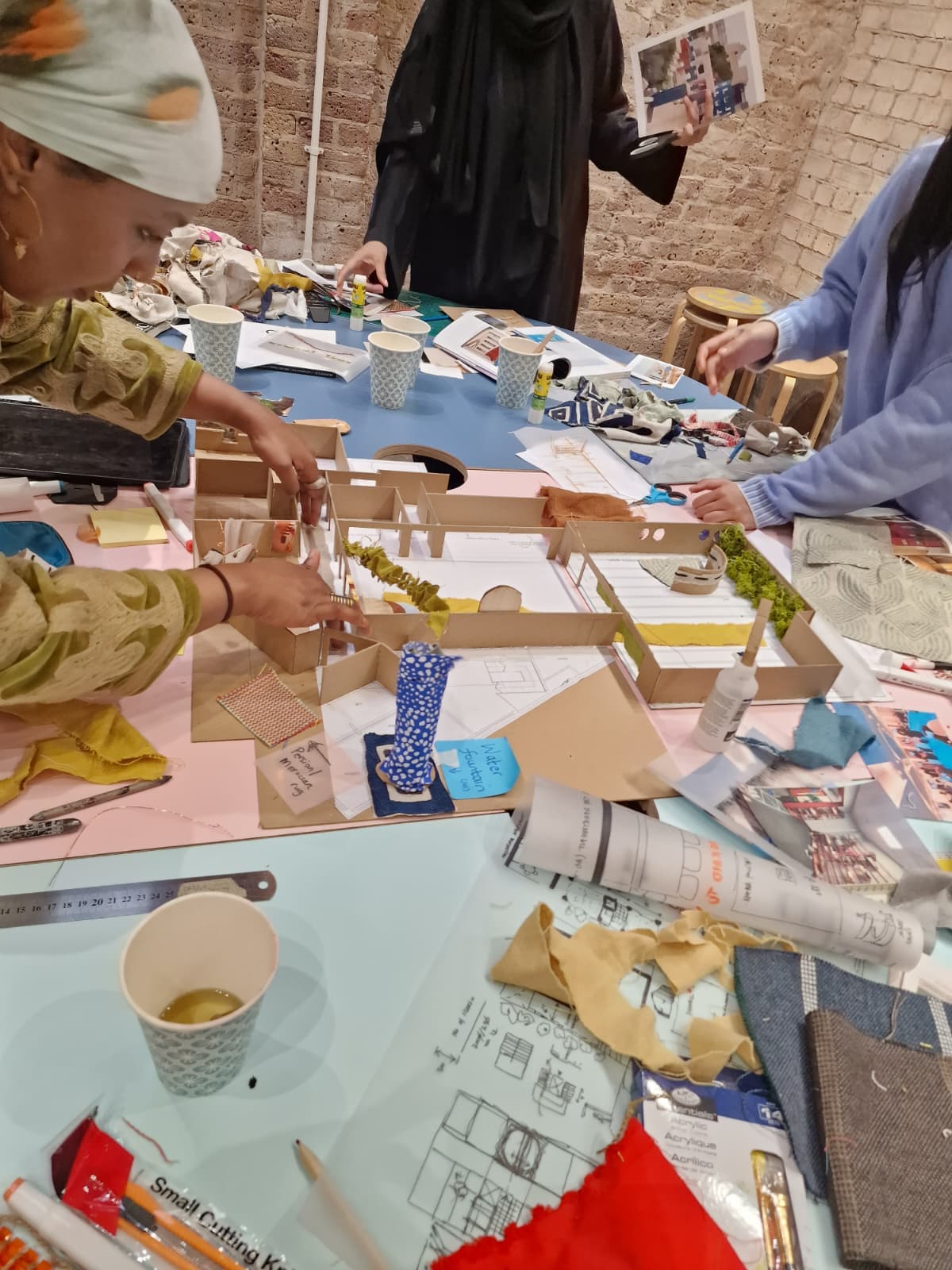
The programme culminated in a participatory design session, where participants worked together to reimagine the mosque space.
This included:
- building physical models
- creating visual concepts
- identifying changes to layout, lighting, and use of space
What enables participation
A central part of the project is how it combines reflection with physical experience. Rather than only talking about wellbeing, participants:
- moved through spaces
- noticed their reactions
- explored how environments shaped their feelings
This made the work feel tangible and accessible.
Participants also valued the care and attention given to how the sessions were set up:
“We felt valued because we can see every single detail was thought about.
The environment itself became part of the process. Lighting, scent, sound, food and movement were not just background details. They helped create:
- a sense of care
- increased comfort
- willingness to engage
a feeling that the space had been prepared with people in mind
This was informed by careful attention to emotional safety, choice and agency. Participants were invited to notice their own responses, move through the space at their own pace, and reflect without being pushed to disclose more than they wanted to.
The combination of shared experience, cultural relevance, and sensory design helped create a space where participants felt able to take part.
Reflection developed gradually over the course of the sessions. Participants were not required to share, but over time:
- conversations became more open
- personal experiences were discussed
- connections between participants developed
Some participants described wanting more time for discussion and interaction, particularly with each other.
There was a clear appetite for:
- deeper conversation
- more time with others in the group
- continued engagement beyond the sessions
The process also supported participants to think differently about their environment and daily lives. For example, some began to reflect on their own home environments and how these affected how they felt.
Changes, experiences and impact
The value of the project was seen both individually and collectively. Participants described:
- becoming more aware of how spaces affected them
- thinking differently about their own wellbeing
- feeling more connected with others
- recognising that they could contribute to how spaces are shaped
The work also supported a sense that participants could influence the environments they use, rather than only receive support within them.
Through the design process, participants began to see themselves as able to contribute to the spaces around them:
“You don’t have to be a designer… your body speaks before anything.”
This shift, from passive user to active contributor, was a key part of the project.
The space itself became something participants could question, reshape, and engage with differently.
These changes should not be overstated, but the conversation suggests that the project created opportunities for participants to notice their own responses, connect with others, and imagine faith and community spaces differently.
The evaluation tools and group reflections helped capture both individual experiences of wellbeing and how the mosque environment itself shaped feelings of ease, belonging and emotional comfort.
Challenges and tensions
The project operated within a number of practical constraints.
These included:
- limited time, with six weeks not being enough to fully explore the work
- scheduling challenges linked to prayer times and use of space
- the timing of the programme in relation to Ramadan
Participants expressed a desire for:
- Longer programmes
- more frequent sessions
- additional time for reflection
There were also wider challenges linked to:
- accessibility, including language and disability
- reaching a broader range of participants
- navigating relationships with institutions managing the space
The conversation highlighted that working in faith and community spaces requires time and careful relationship-building. Access to space is not only a logistical issue. It depends on relationships with institutions, shared understanding of the work, and confidence that the process will be held safely and respectfully.
There is also a tension around how this kind of work is understood. The project does not fit neatly into a single category such as therapy, design, community engagement or faith-based activity. Its value sits across these areas, which can make it harder to explain through narrow outcome frameworks.
Sustaining the work
The project placed importance on how the work was held and facilitated.
Shared facilitation was a key part of this, allowing:
- different forms of expertise to be present
- greater attention to participants’ needs
- space for facilitators to support one another
Regular debriefs after sessions created space to:
- reflect on what had been shared
- process emotional content
- support facilitator wellbeing
As described in the conversation, this helped prevent the work from being carried beyond the session:
“Once everything was said… you felt really light when you left.”
This structure helped sustain both the facilitators and the quality of the work.
The project highlights the importance of:
integrating wellbeing into everyday community spaces
- using creative and sensory approaches
- grounding work in lived experience and cultural context
- allowing time for reflection and trust to develop
It also points to the need for:
- longer-term funding
- flexibility in how outcomes are defined
- recognition of relational and informal work
As described in the conversation, short-term funding limits the depth of impact:
“Community takes care… it needs a lot of watering… it takes time.”
Sustaining this work depends on time, trust, access to space, skilled facilitation and the ability to keep developing relationships with both participants and institutions.
Looking ahead
There is strong potential to continue and expand this work.
Future priorities include:
- extending the length of programmes
- strengthening ongoing engagement with participants
- developing design interventions within mosque spaces
- sharing learning with institutions and decision-makers
This case study suggests how wellbeing can be explored through the design, use and feeling of everyday faith and community spaces.
For Mimbar360, the route into support is not only through conversation, but through sensory experience, movement, creativity and the invitation for people to notice how spaces affect them, and how they might help shape those spaces differently.
Contributors
Harriet Vickers
Co-founder of Peace Collective
Harriet Vickers is a facilitator and practitioner working at the intersection of dialogue, community resilience, and trauma-informed practice, supporting reflection and collective action.
Katasi Kironde
Thrive LDN
Thrive LDN is a citywide public mental health partnership to ensure all Londoners have an equal opportunity for good mental health and wellbeing.
About the Author
Harriet Vickers
Co-founder of Peace Collective
Harriet Vickers is a facilitator and practitioner working at the intersection of dialogue, community resilience, and trauma-informed practice, supporting reflection and collective action.
Gallery