The Architect Series with Soumia Masmoudi
By Ikram Hirse
A reflective conversation with regenerative architect Soumia Masmoudi on sacred space, water, sensory design, and how architecture can cultivate healing, presence, and belonging.

The Architect Series with Soumia Masmoudi
A reflective conversation with Soumia Masmoudi on designing with nature through a regenerative design approach, and how spaces can reconnect people to the land, releasing the noise of modern life while fostering healing, presence, and belonging.
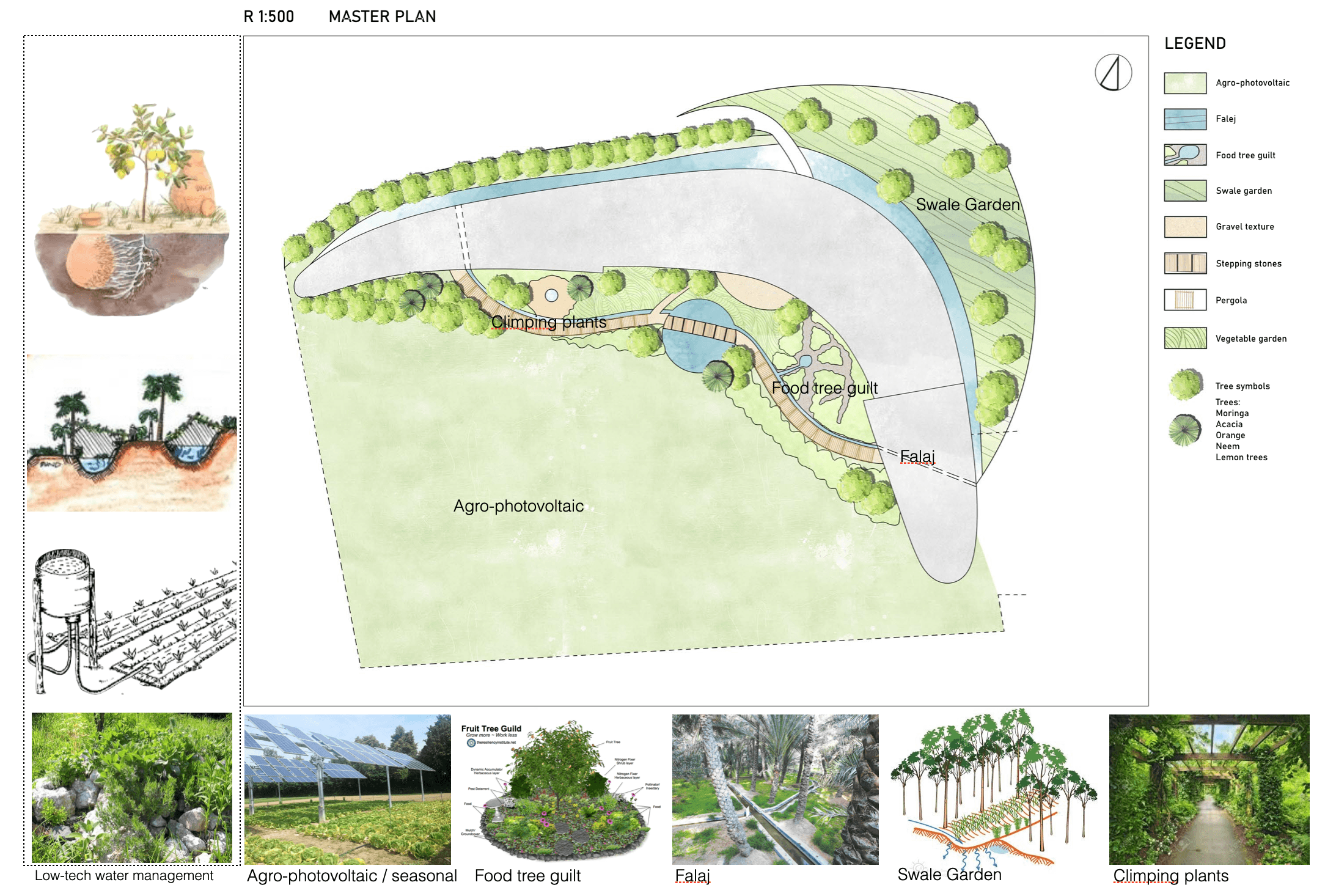
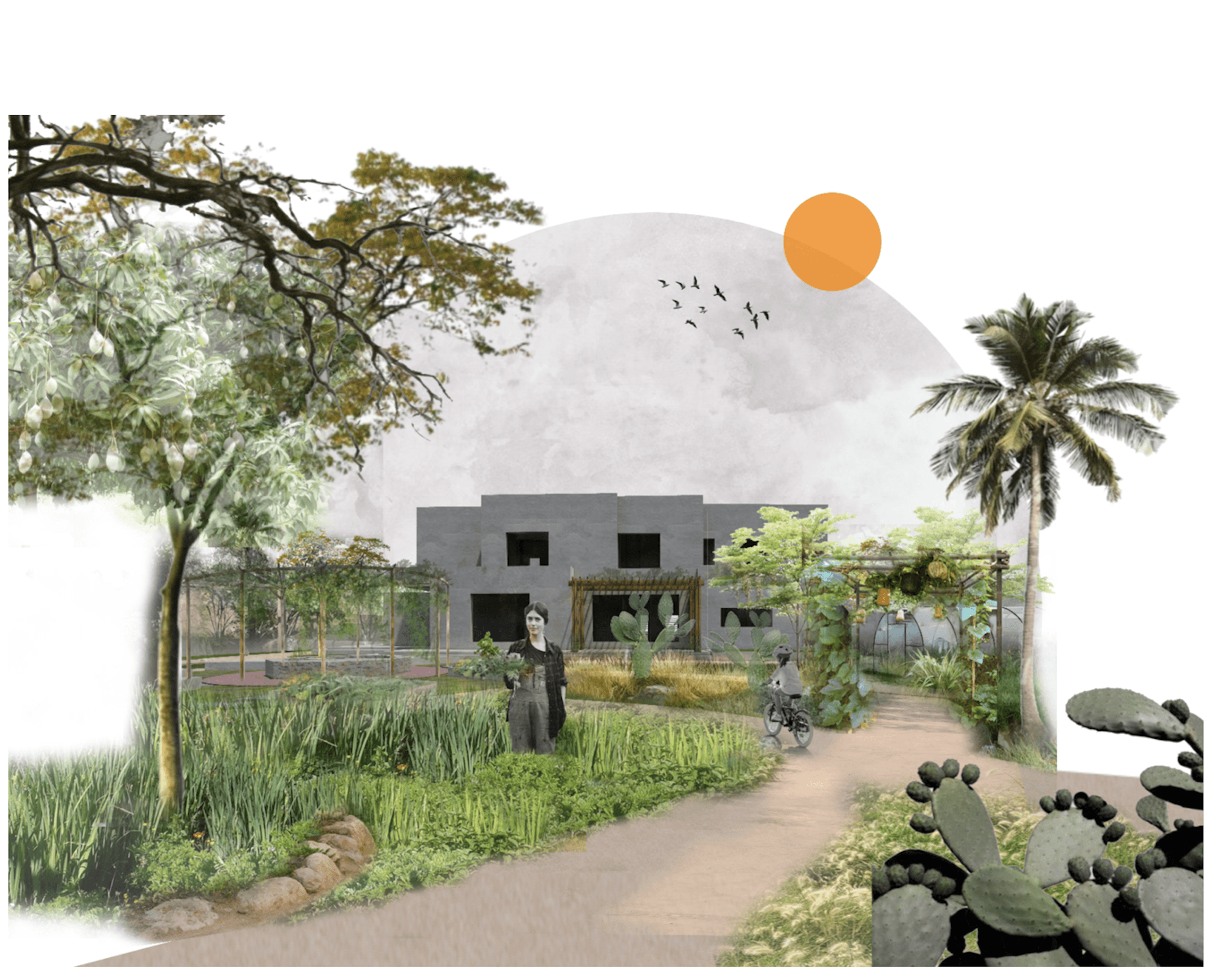
Soumia Masmoudi is a regenerative architect and urbanist working at the intersection of nature-based design, agritourism, and experiential landscapes. Through a regenerative approach rooted in ecology, permaculture, and cultural context, she designs spaces that reconnect people to the land and restore a sense of presence often lost in modern life. Her work focuses on creating therapeutic, sensory, and educational environments where architecture becomes a medium for release, healing, and belonging.
Listening as Origin
There is a moment, just before entering certain spaces, when the body begins to adjust. Shoes come off. The pace slows. The air changes, sometimes imperceptibly, but enough to register. You are no longer moving through; you are arriving.
For Soumia Masmoudi, this awareness is lost in modern life. In many oriental countries, the threshold is not simply architectural, but embodied. For her, the success of a space lies in its ability to create transition.
For homes, sacred spaces, and temples, “You don’t enter the same way,” she says. “You transition into another dimension.”
A well-considered space begins long before its centre. It starts at the edge, allowing the body time to shift. Without this, there is no arrival, only continuity.
Across mosques, temples, and churches, she began to recognise a shared language. Not one of style, but of gesture. Water prepares the body, light marks time, the air carries memory. Ritual creates orientation.
Belonging, she suggests, is rarely announced. More often, it is sensed before it is understood.
Sensing the Form
In Soumia’s work, design does not begin with analysis. It begins with sensing.
“We rely too much on the mind,” she reflects. “But the body already knows.”
This becomes most visible in spaces of gathering and prayer. A space is not successful because it is visually resolved, but because it changes how you inhabit it. It lowers the volume of the room. It slows movement. It invites you to remain a little longer.
She speaks about architecture almost as choreography. The softness of the flooring in hotel corridors encourages quieter movement. A low ceiling creates compression, in contrast to a higher ceiling facilitating the opening of the body and extending time.
Some spaces welcome, while others quietly discourage staying.
In today’s architecture and urbanism, careless design is sometimes used intentionally to push people away and prevent them from using or staying in a place.
What we often interpret as beauty, she suggests, is something closer to order and body connection. Not decoration, but sacred order. A proportion that steadies. A rhythm that the body recognises effortlessly.
She remembers the Mozabite mosque in Ghardaïa, south of Algeria — vernacular architecture almost without ornament, no decoration, only simple pillars painted in lime. Yet it carried a presence that was unmistakable.
“It was enough,” she says. “Nothing more was needed. You could feel it.”
Soumia believes sacred energy can only be created through divine order and by respecting the proportions of life in design, a concept linked to bio-geometry, which studies the connection between form and energy, or the wabi-sabi understanding of nature as the highest essence of beauty.
Grounding the Body, Listening to the Land
To design with the body is, inevitably, to design with the land.
Soumia speaks of time spent in Japan, learning through “forest bathing” training called Shinrin-yoku and the effects the natural environment has on the nervous system: lowered stress (cortisol), reduced blood pressure and heart rate, boosted immunity through phytoncides, increased energy, and improved mood and cognitive focus. She reflects on how the body feels and embraces natural space.
The same principles could be used in architecture. By using earth floors, we release tension through contact with the ground, remove shoes, and reconnect with the earth to discharge built-up electromagnetic energy. The senses recalibrate in environments that are not sealed or controlled. The same applies to natural air circulation, which must be considered in design.
“The body needs to connect to regenerate,” she says. “Otherwise, it holds everything.”
Modern interiors, she notes, often interrupt this relationship through synthetic materials, sealed surfaces, and stagnant air. The effect is subtle, but cumulative: a nervous system that never quite settles.
Earlier mosque forms suggest another possibility — open courtyards, air moving freely, light marking the rhythm of the day. Prayer held within the elements rather than separated from them.
“The Prophet’s Mosque was open,” she notes. “There was movement of air and light.”
To listen to a place is not to impose form onto it, but to recognise and honour what already exists, and work in relation to it.
On Sanctuary
A sanctuary is not something imposed onto a building. It already exists before the building, and can be helped to emerge through atmosphere, proportion, and care in design.
“It feels like entering another dimension,” she says. “But one that holds you.”
Certain spaces hold this quality immediately. There is a sense of scale that does not overwhelm, but grounds. A clarity that allows the body to settle, allowing the person to feel something larger than themselves holding them, and through this interaction, elevating one’s spirituality.
The capacity of space to transmute and re-engage the body is a powerful notion. Soumia explains that a space needs the capacity to “purify the emotions” of people, suggesting that a clean heart and connection with the divine are needed to handle and transmute negative emotional energy.
She adds that if a person feels good after visiting a place, it indicates that the space has successfully done its job.
She returns to the idea of older spaces — mosques, gardens, forests — places that seem to absorb what is heavy and return something lighter.
“A good space transforms what you bring into it,” she says.
Material as Memory
Materials, in Soumia’s work, are never neutral.
“Natural materials are alive,” she says. “They still carry something.”
What they carry is not only texture, but presence, to light, to time, and to the body itself. When materials become over-refined, they lose their spiritus, their essence, or the “holy.”
Today, many contemporary mosques prioritise efficiency and functionality through cold design. Yet memory often lives in the opposite condition: handmade, worn carpets softened by use, stone holding coolness, light diffused across textured surfaces.
Architects, she suggests, should not overwhelm a place, but work in relation to what already exists there.
The atmosphere is shaped through these details.A softer light.Air that circulates.Space for quietness to settle.Not additions, but conditions.
Practice, Pace, and Resistance
Soumia does not describe her design as fast or monumental.
“Design is a process. It needs to mature,” she says. “As an architect and landscaper, I let the place express itself in many aspects.”
For her, there is no design without inspiration. Inspiration is the key to good design. No genius loci without this step. Attention must move beyond the architect’s mind or ego, aligning with feeling through inspiration.
“The architect is not the centre,” she says. “He is just a channel.”
For her, this is one of the differences between occidental and oriental design. One believes he creates; the other co-creates.
Care as Practice
If design begins with attention, it continues through care.
“It’s not just what you build,” she says. “It’s how it is loved and maintained.”
Care is visible in the smallest gestures: cleaning, gentle repair, daily attention. In some traditions, this is understood as part of spiritual practice. In Zen temples, gratitude toward a place is expressed through action toward it.
When a place is reduced only to its function, there is no care. Maintenance becomes purely technical and mediocre, and this reflects in the quality of the place. Visitors feel it.
A space reflects the one who cares for it. Atmosphere accumulates over time through use, attention, and love.
“It is sad for sacred places to become mediocre and neglected,” she says. “That happens when we lose the feeling of belonging.”
Beyond What Can Be Measured
Much of architecture today is driven by what can be quantified: cost, scale, client demands, and output.
But what makes a space meaningful, she suggests, resists measurement.
“Resonance is invisible. Happiness is invisible...” she says.
This is not about following visual trends or historic styles. Here lies the power of traditions: they craft space in the same way bees or birds build. There is a beat that dictates rhythm. This is why going faster or using machines affects quality.
“We can’t fully explain it because it transcends the visible.”
Through this path, human intention, intuition, and feeling become tools for activating the genius required for sacred design. The hand and the heart become gateways to creating beauty.
Mosque as Living Ecosystem
“I never participated in or designed a sacred space. But I have studied and visited many around the world — mosques, churches, Buddhist and Zen temples. I love capturing details through my senses. This exercise is powerful, and today it is even used in neuromarketing.”
Soumia considers human disconnection to be the root of many problems.
“What if a mosque were understood not as a completed object, but as a living environment?”
She touches on the “acupuncture of the earth” as an example of understanding the character of the land before any building. Then, after the building exists, other layers continue to structure the energy of the place.
A building is continuously shaped by those who use it and by how it is cared for. Spaces become heavy or light depending on the attention and care they receive regularly.
A neglected environment carries a different feeling from one that is loved and maintained.
This raises a question of belonging: not only whether a mosque is accessible, but whether we feel part of it. Whether it allows people to feel held — not only to accomplish ritual, but to create connection.
A Different Future
The mosque of the future, she suggests, may not look radically different, but it may feel different: more open, responsive, and connected to the land, to air, and to the body itself.
Soumia Masmoudi links the transformation of space and self to the practice of gratitude (shukr).
“In Islam, there are many practices we reduce to words. But what if shukr became an action demonstrated through place? Cleaning and taking care of things become your hamd, your sadaqa, your dhikr.”
If we reuse the water of wudu for the garden, we honour the Creator through His creation. Gardens should be part of every mosque, especially in regions where most Muslim countries are in hot climates and water is scarce.
“So religion is not only on the carpet, while in daily life, we become disconnected. This is fundamental.”
Less concerned with scale and more with experience.
“We don’t need monumental buildings,” she says. “We need spaces that reflect dignity.”
Return
In the end, what remains is not an image, but a sensation.
Soumia said” Design that transforms transcends the visible, where the architect, those who take care of the place, and the visitor are invited to be part of the same living intention.
A mosque becomes more than architecture; it becomes an experience of dignity shared between those who design, those who care for it, and those who enter it.
Belonging is cultivated effortlessly, carried by those who maintain the place and felt by those who arrive.
“A beautiful place”, she says, “reminds you that you are part of the creation, not separate from it. And with that recognition, something within should soften."
About the Author
Ikram Hirse
Founder of Mimbar360
Ikram Hirse is a social entrepreneurship based in the UK.
Gallery